Le Puy

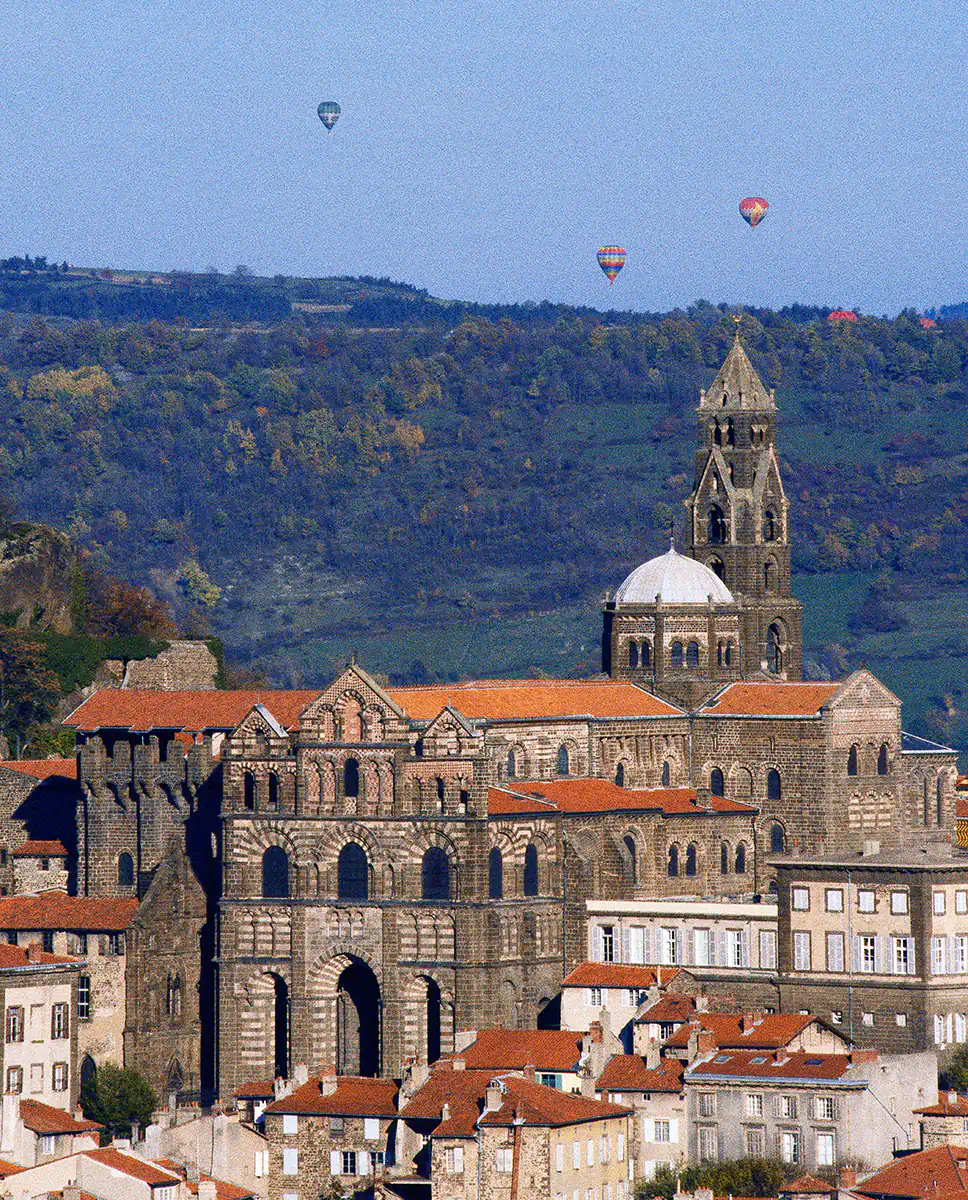
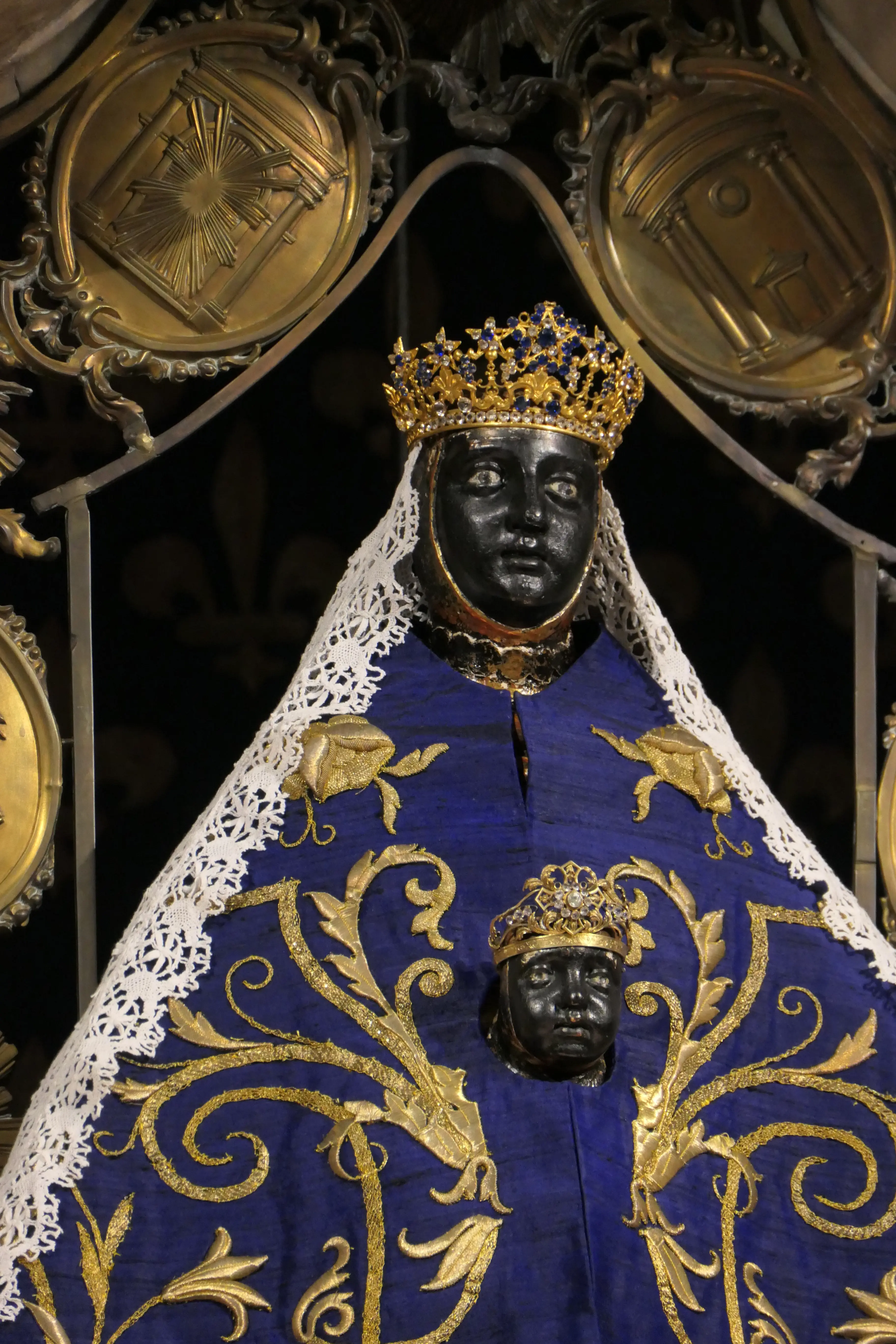
Crowning the summit of Mount Corneille in the Auvergne region of central France, the cathedral of Notre Dame in Le Puy is one of Europe's oldest, most famous, and most beautiful pilgrimage shrines. Much visited during medieval times by pilgrims on their way to Santiago de Compostela and highly revered for its Black Madonna statue, Mount Corneille's use as a sacred place has its roots in prehistoric times. Before the arrival of Christianity, an enormous dolmen, or single-standing stone, stood atop the holy hill. Nothing is known of the people who erected this stone nor of how it was used, yet the mysterious stone was to play a decisive role in the development of Le Puy as a Christian pilgrimage site.
Sometime between the 3rd and 4th centuries AD, a local woman suffering from an incurable disease had visions of Mary. In her visions, she received instructions to climb Mt. Corneille, where she would be cured by sitting on the great stone. Following this advice, the woman was miraculously cured of her ailment. Appearing to the woman a second time, Mary gave instructions that the local bishop should be contacted and told to build a church on the hill. According to legend, when the bishop climbed the hill, he found the ground covered in deep snow even though it was the middle of July. A lone deer walked through the snow, tracing the ground plan of the cathedral that was to be built. Convinced by these miracles of the authenticity of Mary's wishes, the bishop completed the church's construction by AD 430. Despite ecclesiastical pressures, which sought to combat the survival of pagan religious practices, the great dolmen was left standing in the center of the Christian sanctuary and was consecrated as the Throne of Mary. By the eighth century, however, the pagan stone, popularly known as the "stone of visions," was taken down and broken up. Its pieces were incorporated into the floor of a particular section of the church that came to be called the Chambre Angelique, or the "angels chamber." Most of these early structures disappeared and were replaced by the current basilica, a composite construction dating from the 5th to 12th centuries AD. While primarily an example of Romanesque architecture, the massive cathedral of Notre Dame shows strong Byzantine and Arabic influences in both its construction and decoration.
Readers interested in studying the subject of Black Virgins, Dark Goddesses and Mary Magdalene in greater detail will enjoy the books, The Cult of the Black Virgin, by Ean Begg; Shrines of Our Lady, by Peter Mullen; and Mary Magdalene: Christianity’s Hidden Goddess, by Lynn Picknett.
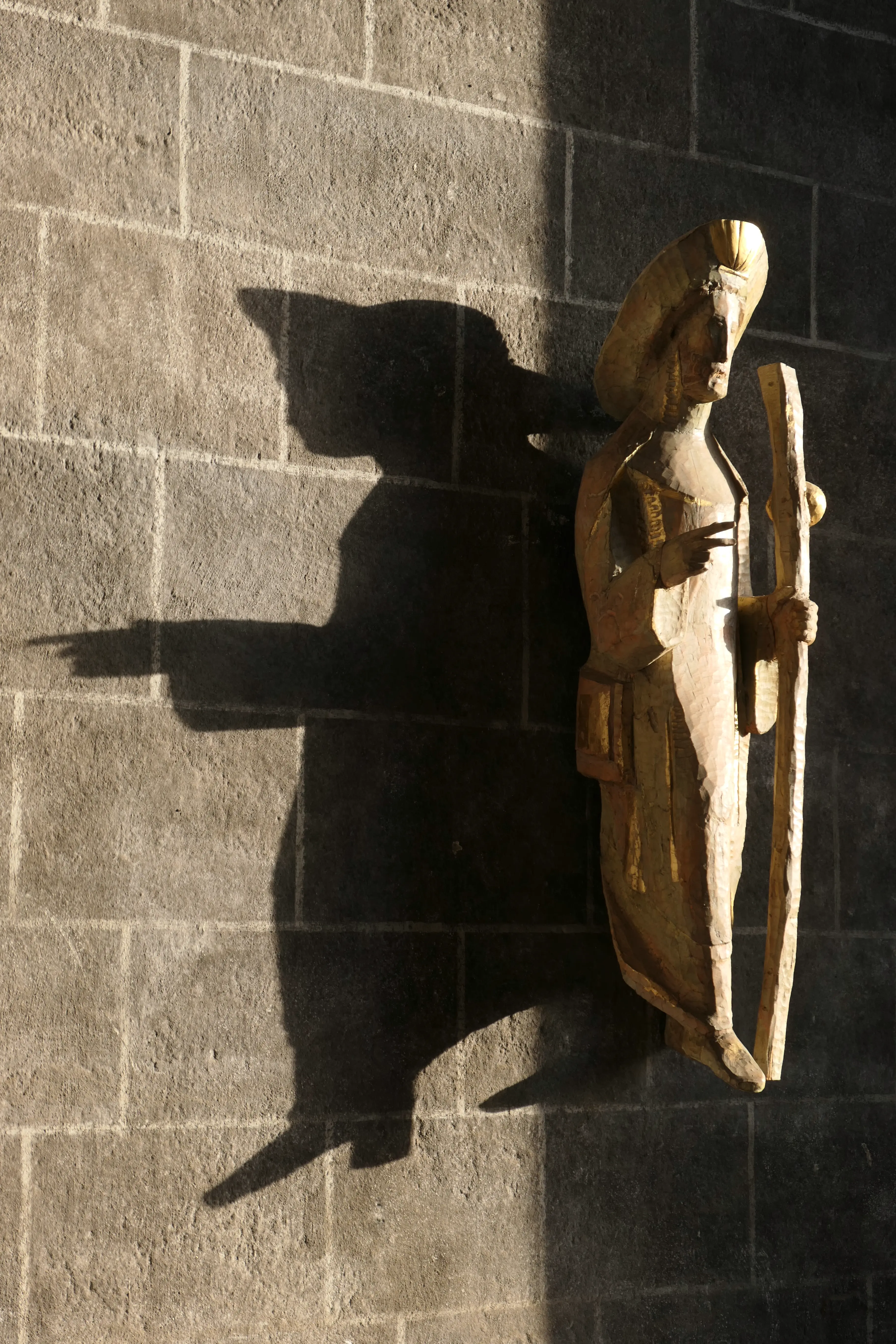
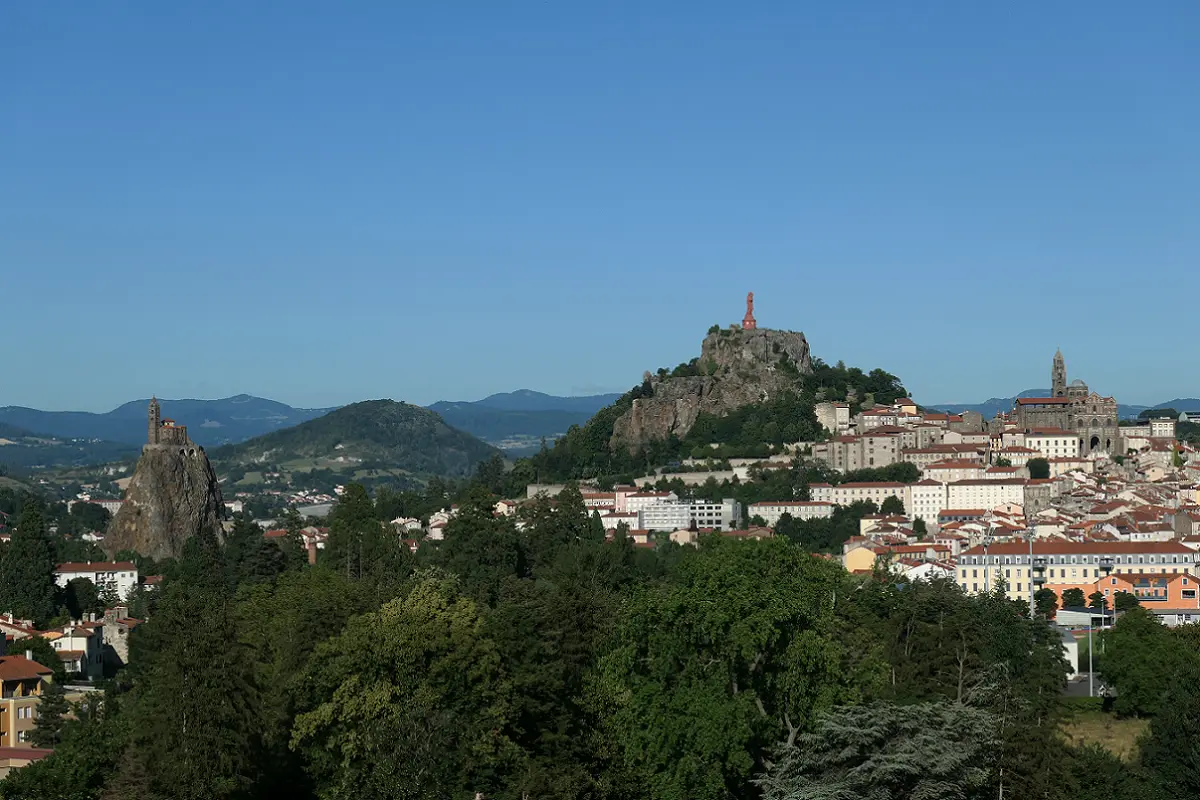
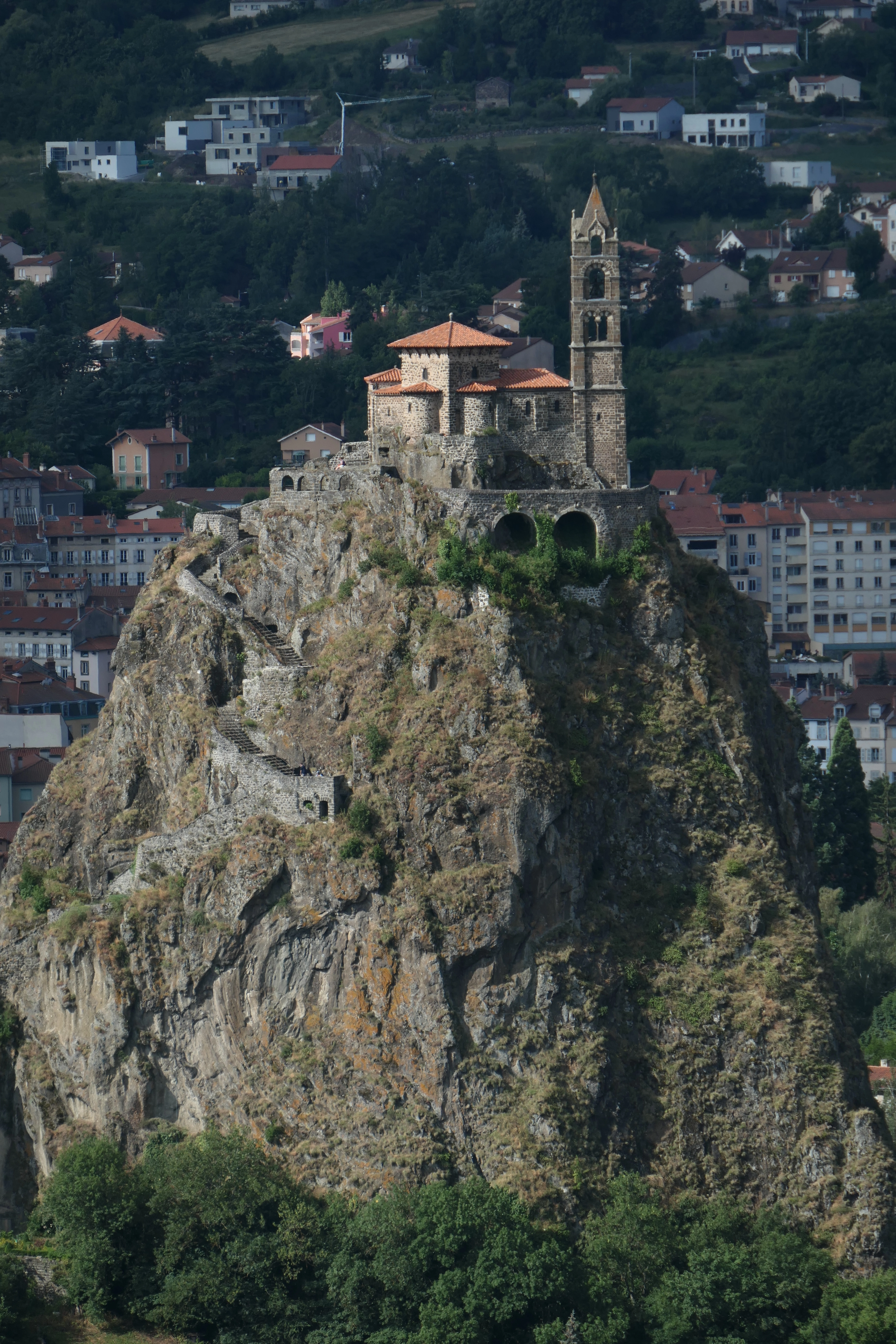
Le Puy has an another pilgrimage shrine that was much visited during medieval times. Perched high atop an eighty-five meter needle of steep volcanic rock, the Chapel of St. Michael marks another site known to have had pre-Christian sanctity.
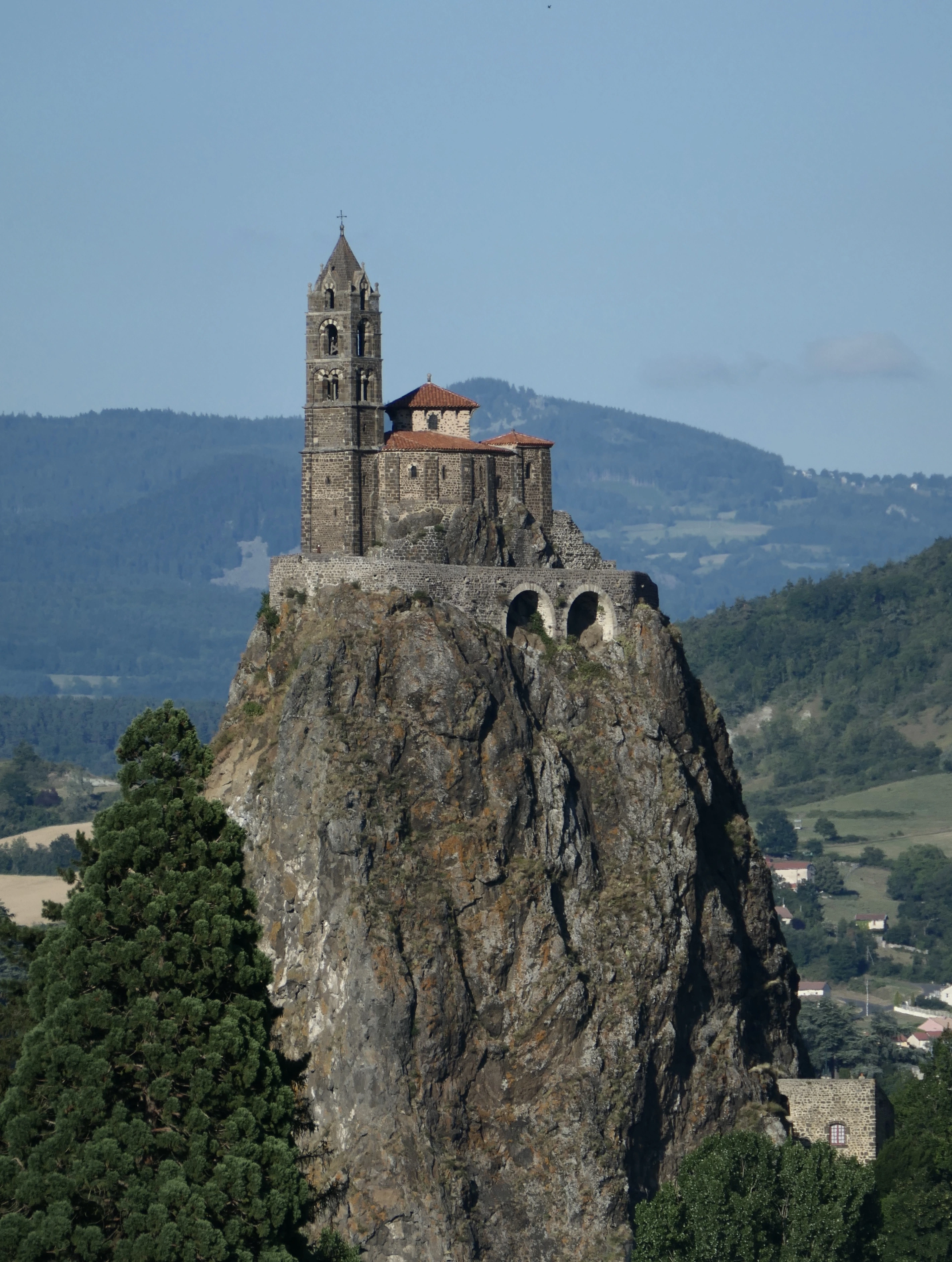
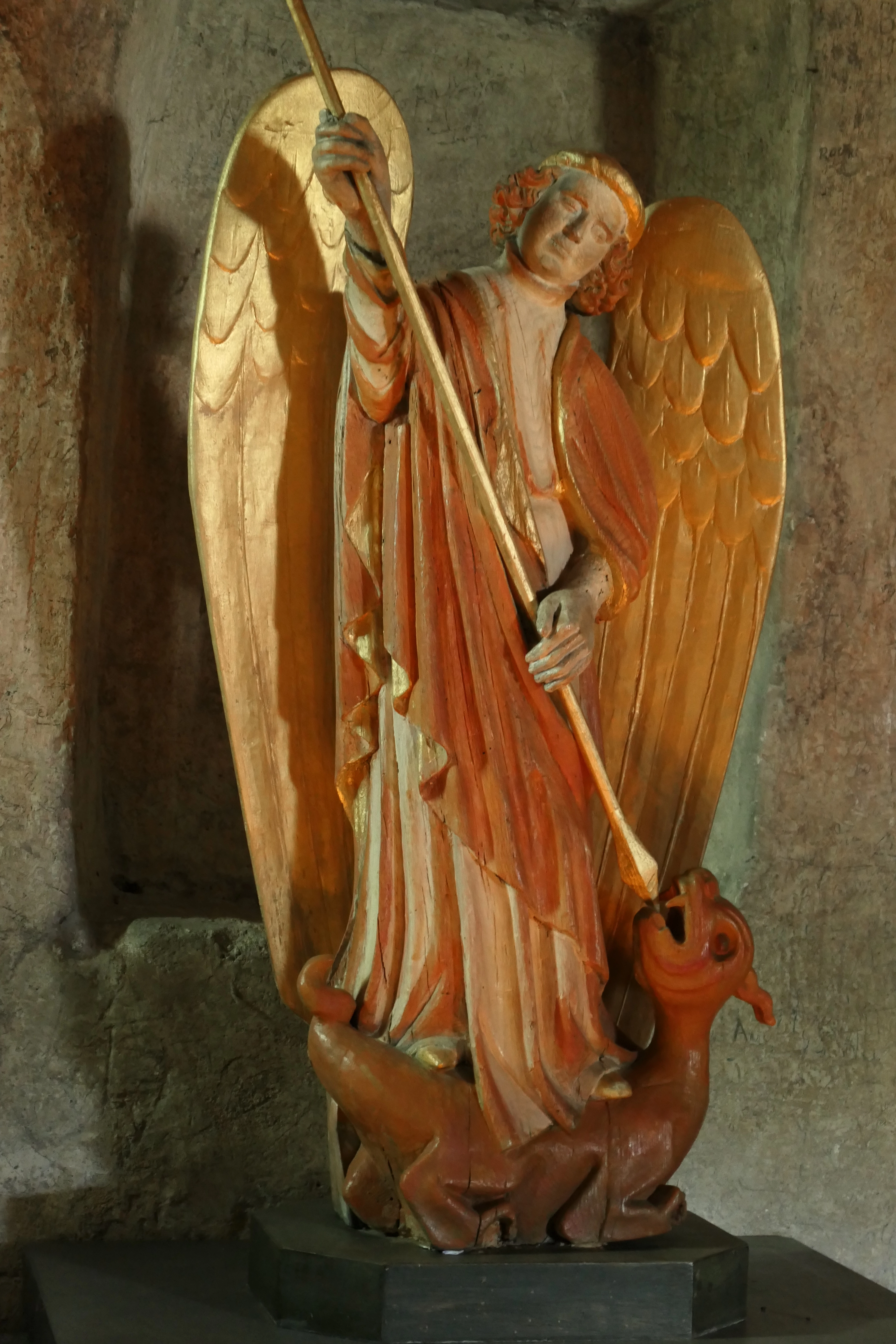
Long before Christian hands shaped its stones, the needle held sacred power. A prehistoric dolmen once stood upon the summit, its great stones later built into the chapel walls. The Romans raised a shrine there to Mercury, god of travelers and lofty places. Local legend adds that the rock itself was the work of the giant Gargantua, yet its truest guardian became the Archangel Michael, celestial warrior and patron of mountaintops. Tales tell of Michael appearing upon the pinnacle to banish a dragon that terrorized the valley, casting the beast into the depths and claiming the height as his eternal watchtower.
In 951 Bishop Godescalc returned from the first recorded French pilgrimage to Santiago de Compostela. To give thanks and mark the road he had opened, he and Dean Truannus raised the chapel, consecrating it in 961. What began as a modest oratory soon expanded to shelter the faithful drawn by its growing renown.
For pilgrims the chapel holds profound meaning. Le Puy stands at the head of the Via Podiensis, the ancient way to Compostela. Before setting forth, devotees climb the needle to commend themselves to Saint Michael’s protection. The ascent mirrors the spiritual journey ahead—steep, demanding, yet filled with promise of grace. For more than a thousand years the Chapel of St. Michael has thus served as both guardian and gateway, where the pilgrim’s first true step toward Compostela is taken in the archangel’s shadow.
The Via Podiensis
The Via Podiensis, also known as the Le Puy Route or Chemin du Puy, is one of the four principal medieval pilgrimage routes through France leading to the tomb of Saint James the Apostle in Santiago de Compostela, Spain. It stands as the oldest and most historically significant among them, originating in the tenth century and embodying the spiritual journey of countless pilgrims.
The route traces its beginnings to around 950–951, when Godescalc, Bishop of Le Puy-en-Velay, became the first recorded non-Hispanic pilgrim to undertake the journey to Santiago with a large retinue. His pilgrimage helped establish Le Puy as a major departure point. By the Middle Ages, the Via Podiensis flourished as pilgrims from across Europe—especially from central and eastern regions—traveled it, merging with other French routes before crossing the Pyrenees. The path fell into relative disuse over centuries but saw revival in the 1970s through waymarking as the GR65 long-distance hiking trail, restoring its role as a vibrant pilgrimage route today.
The Via Podiensis stretches approximately 750–764 km from Le Puy-en-Velay in the Auvergne region of south-central France to Saint-Jean-Pied-de-Port at the foot of the Pyrenees. It typically takes 4–5 weeks to walk, covering varied terrain that tests body and spirit.
Pilgrims begin at the Cathedral of Notre-Dame du Puy, often after visiting the nearby Chapel of Saint Michael. The route then traverses:
• Volcanic landscapes of the Velay
• Steep climbs and descents
• The dramatic highlands of the Aubrac plateau
• Gorges of the Lot Valley
• Limestone plateaus of the Causses
• Rolling hills and bastide towns of Gascony
It ends at Saint-Jean-Pied-de-Port, where it joins the Camino Francés for the final stretch into Spain. Waymarking consists of the signature white-and-red stripes of the GR65.
Highlights include medieval villages such as Conques (with its magnificent Sainte-Foy Abbey), Estaing, Saint-Côme-d’Olt, Cahors (famous for the Pont Valentré), Moissac (with its historic abbey and cloister), and Auvillar. Romanesque churches, ancient monasteries, stone bridges, and traditional gîtes d’étape dot the way, offering shelter and reflection. The landscapes shift from rugged volcanic peaks to lush river valleys and golden farmlands, rewarding walkers with France’s rural heritage.
For pilgrims, the Via Podiensis represents more than a physical path—it is a journey of transformation, penance, and encounter with the divine. The steep initial ascent from Le Puy symbolizes the challenges ahead, while the route’s monasteries and churches provide spaces for prayer and community. Its enduring legacy lies in connecting generations of seekers across diverse cultures and eras, preserving traditions of hospitality (accueil pèlerin) and the timeless call of Ultreïa—ever onward.
In an age of rapid travel, the Via Podiensis invites a slower, more contemplative pace, where each step deepens one’s connection to history, nature, and faith. It remains a living pilgrimage, open to all who seek its ancient graces.

Martin Gray is a cultural anthropologist, writer and photographer specializing in the study of pilgrimage traditions and sacred sites around the world. During a 40 year period he has visited more than 2000 pilgrimage places in 160 countries. The World Pilgrimage Guide at sacredsites.com is the most comprehensive source of information on this subject.