Wat Phra Mahathat

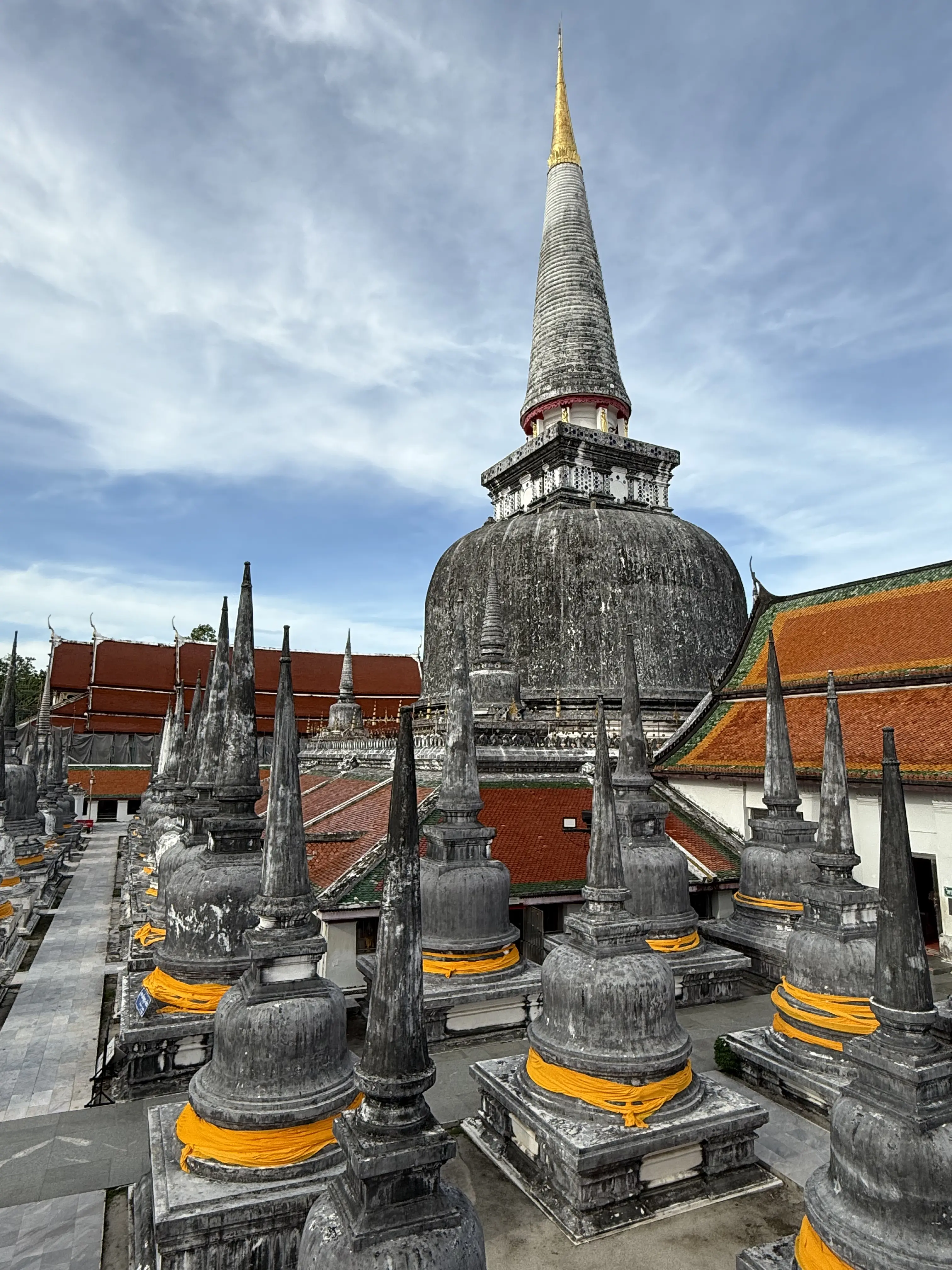
Wat Phra Mahathat Woramahawihan, often called Wat Phra Mahathat or Wat Phra Borommathat, serves as the principal Buddhist temple of Nakhon Si Thammarat Province in southern Thailand. Designated a first-class royal temple of the Woramahawihan class, it stands on Ratchadamnoen Road in the heart of the old city. The complex spans about 5.14 hectares within brick walls and four gates, divided into the Buddha-avasa (sacred zone) and Sangha-avasa (monastic quarters). Its centerpiece is the towering Phra Borommathat Chedi, a gigantic bell-shaped stupa rising approximately 55–78 meters (including the golden spire), symbolizing the “Great Noble Relics Stupa.”
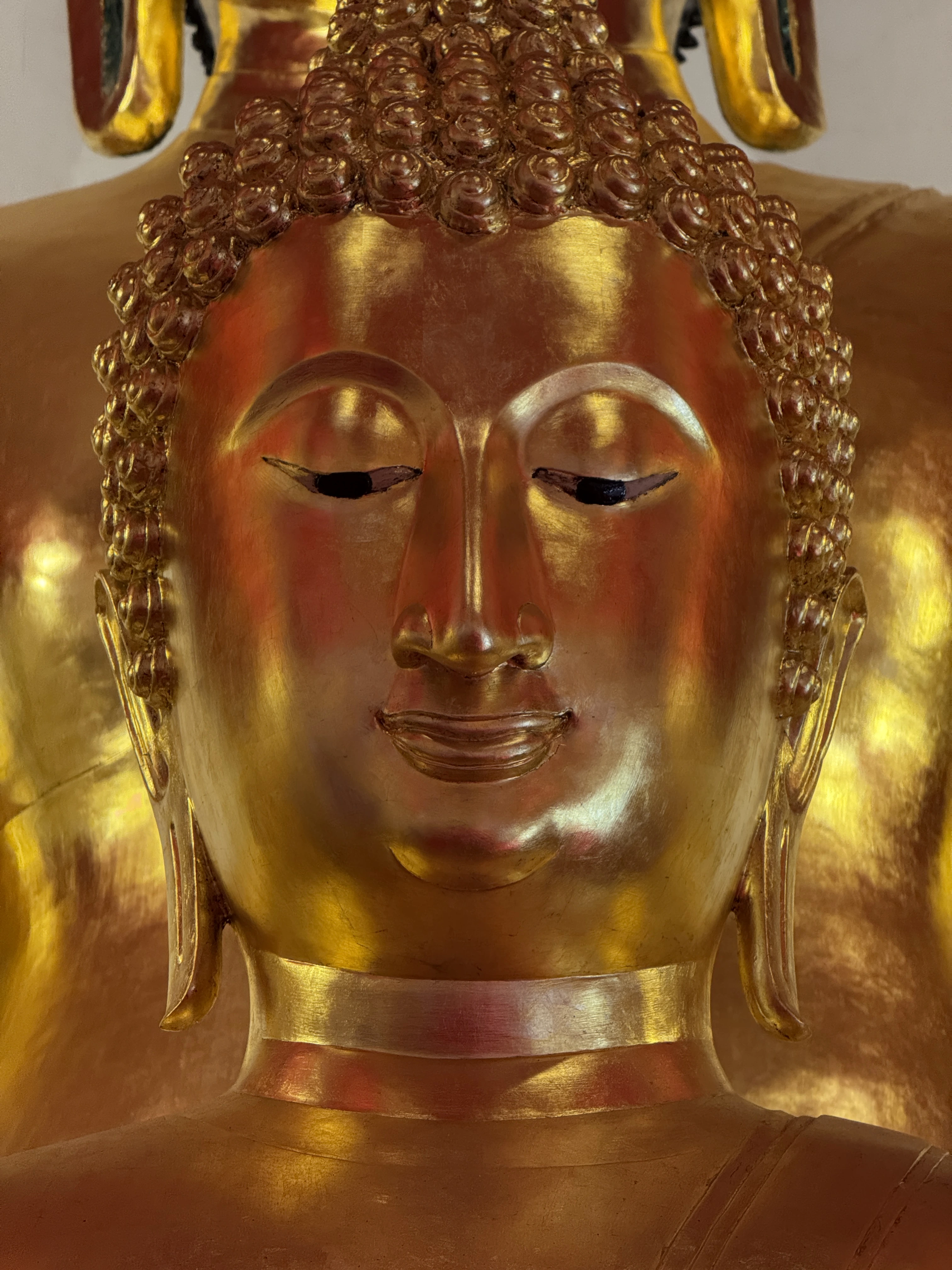
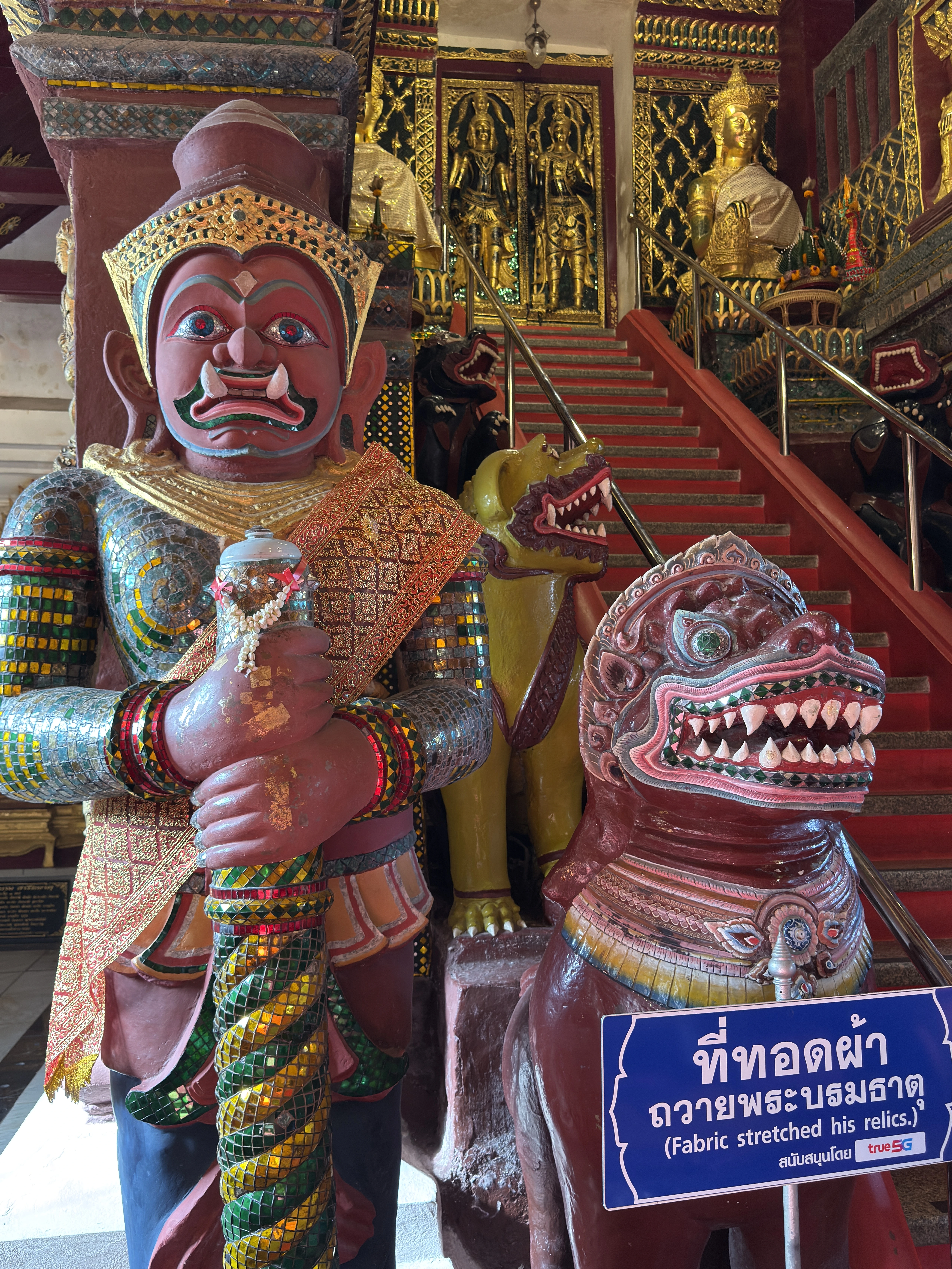
The architecture blends Sri Lankan Theravada influences with local Thai elements. The main stupa features a square base encircled by 22 stucco-covered standing elephants, four smaller corner stupas, and a slender bell-shaped body topped by a square platform, walking Buddha reliefs, and a 10.89-meter spire plated in pure gold (weighing around 600 kg) and studded with jewels. A vast cloister with colored tiles surrounds it, lined with Buddha images and containing 158 minor chedis that hold devotees’ ashes. Additional structures include Wihan Luang (the main assembly hall in Ayutthaya style with inward-leaning columns), Wihan Phra Song Ma with stucco reliefs of the Buddha’s life, a Bodhi tree enclosure, and a museum displaying ancient artifacts. Guardian yaksha figures and intricate decorations enhance the site’s grandeur.
Mythology centers on the sacred tooth relic of Gautama Buddha enshrined within the chedi. According to legend, after the Buddha’s parinirvana, a tooth relic reached the city of Thontha Buri in India. During conflict, King Singharat entrusted Princess Hem Chala and Prince Thanakuman (or Thontha Kuman) to transport it by sea to safety in Lanka (Sri Lanka). A storm diverted their ship, washing them ashore at Hat Sai Kaew near modern Nakhon Si Thammarat around 291 CE. They built a small pagoda to enshrine the relic. Centuries later, when King Sri Dhammasokaraja (or Si Thammasokarat) founded the city in the early 13th century, he constructed the grand chedi on the same site to house it permanently, linking the temple to King Asoka’s legacy of righteous Buddhist rule.
Historically, the site traces roots to the Srivijaya and Tambralinga kingdoms, with early Mahayana influences giving way to Theravada Buddhism from Sri Lanka. King Sri Dhammasokaraja built the main stupa around the early 13th century to establish Theravada as the dominant faith after Srivijaya’s decline. The temple influenced Sukhothai’s Buddhist development and flourished under Ayutthaya and later Thai kingdoms. It underwent at least ten major restorations (notably in the 17th–20th centuries), often under royal patronage named after “Dhammasokaraja,” preserving its form while incorporating communal contributions—even from non-Buddhist donors. Recognized for its cultural significance, it holds tentative UNESCO status.
As a pilgrimage place, Wat Phra Mahathat Woramahawihan ranks among southern Thailand’s most sacred sites. Devotees circumambulate the chedi, offer gold leaf, flowers, and valuables, and make merit daily. The grand annual Hae Pha Khuen That festival (typically during Magha Puja and Visakha Puja) features a massive procession carrying a long painted robe to wrap around the stupa’s base, drawing thousands in a display of communal faith and unity. Pilgrims from across Thailand and abroad participate in alms-giving, lantern offerings, and relic veneration, reinforcing the temple’s role as a living center of Theravada devotion and regional identity.

Martin Gray is a cultural anthropologist, writer and photographer specializing in the study of pilgrimage traditions and sacred sites around the world. During a 40 year period he has visited more than 2000 pilgrimage places in 160 countries. The World Pilgrimage Guide at sacredsites.com is the most comprehensive source of information on this subject.