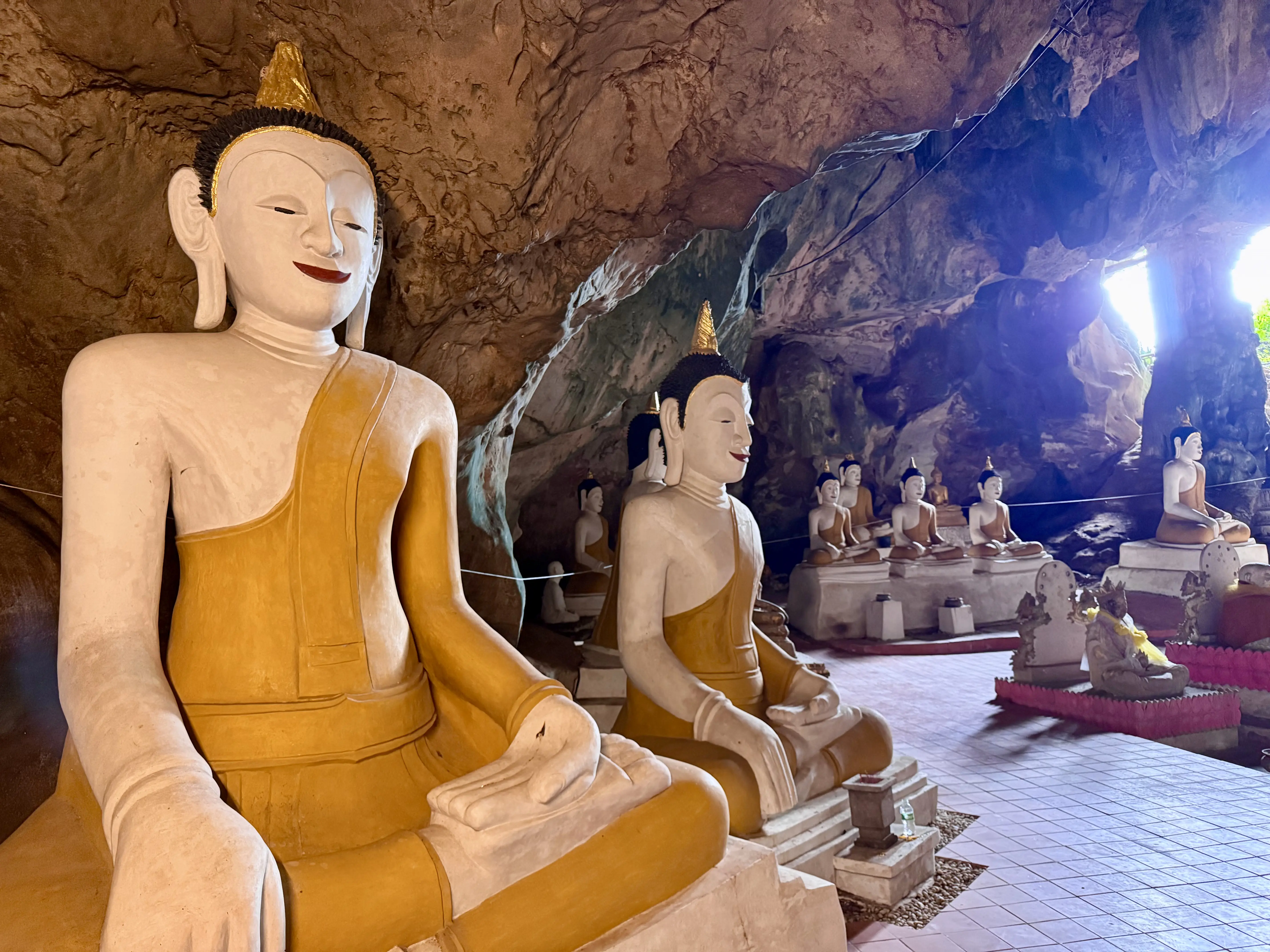
Wat Khuhapimuk

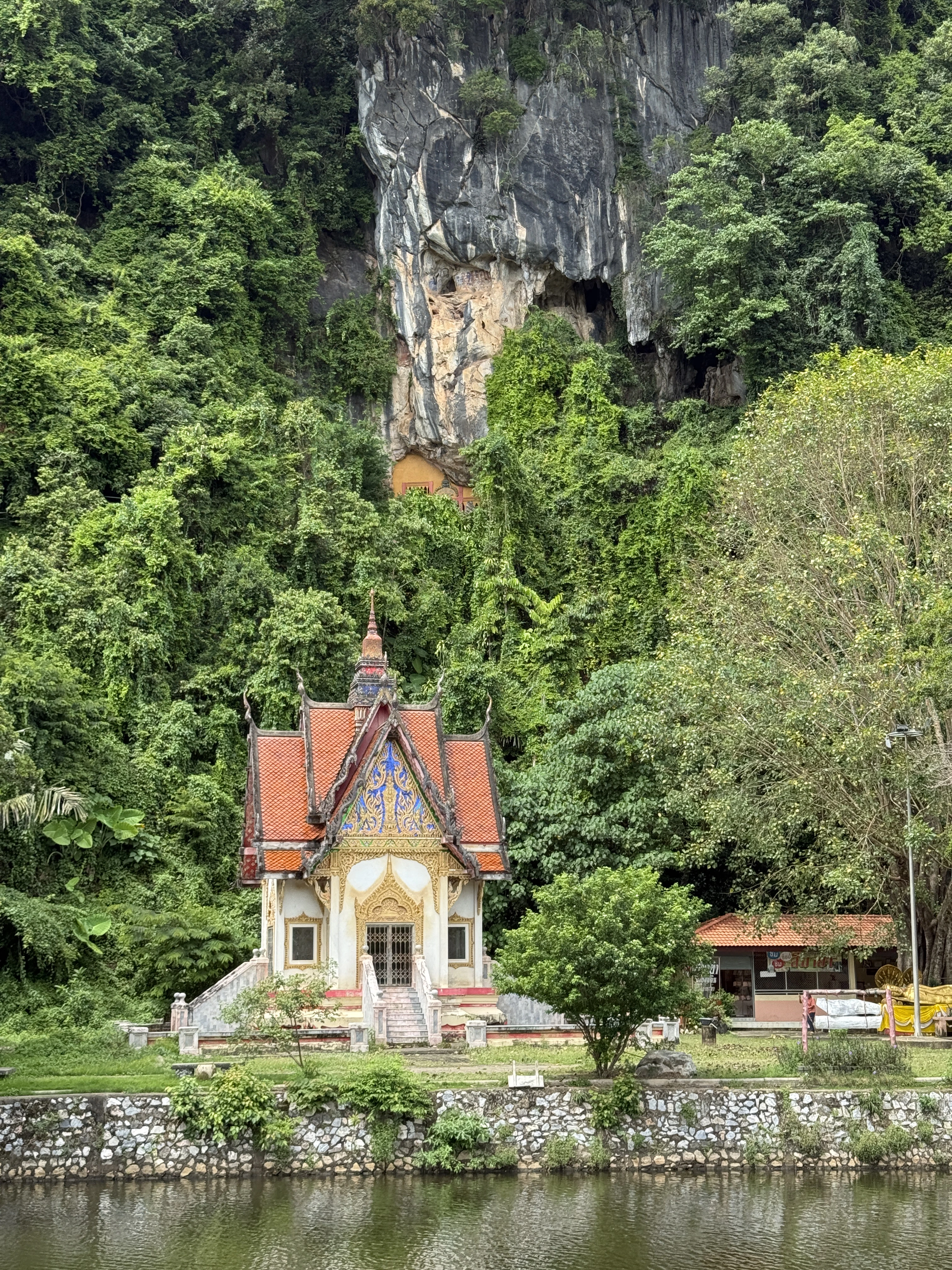
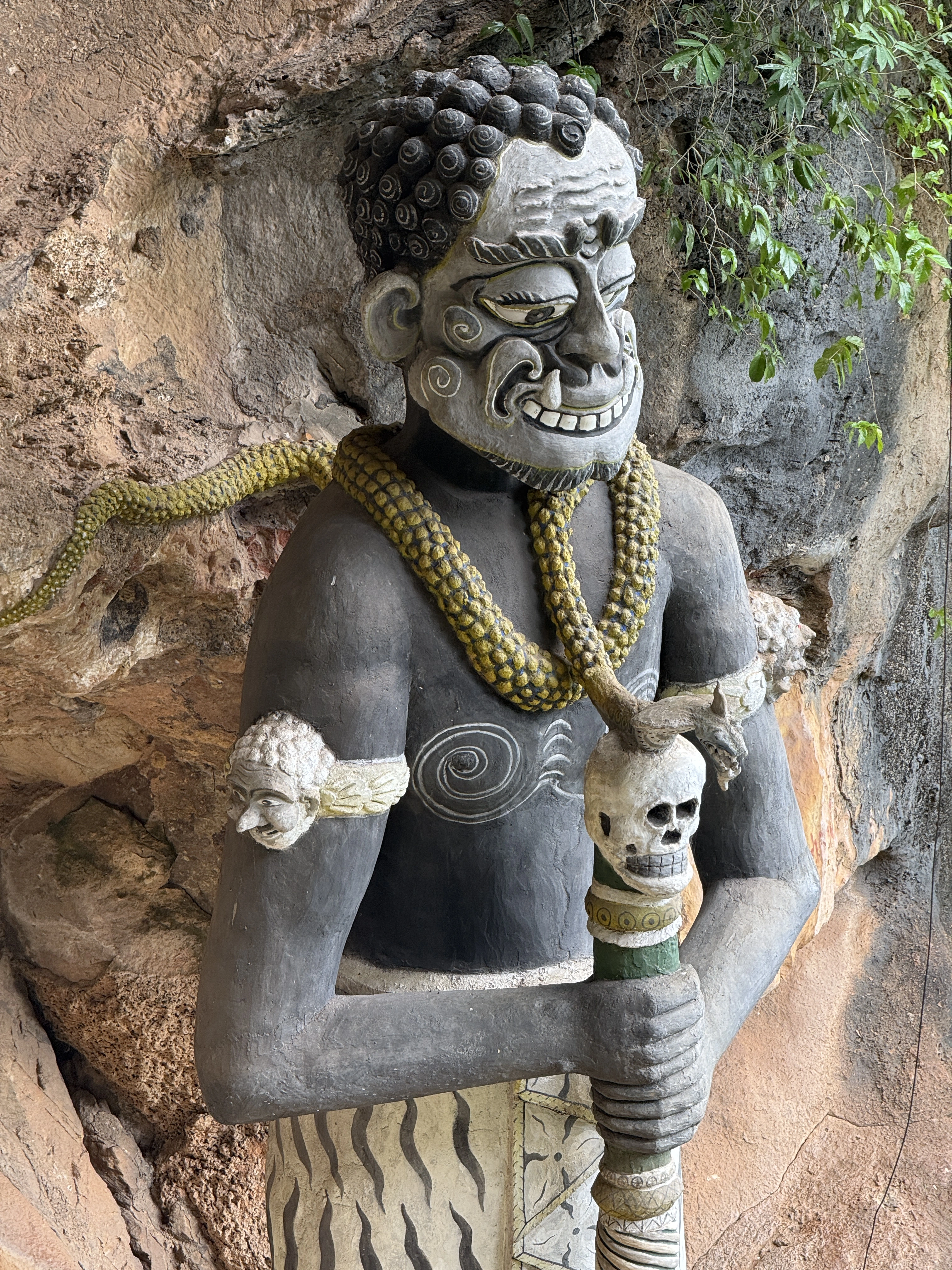
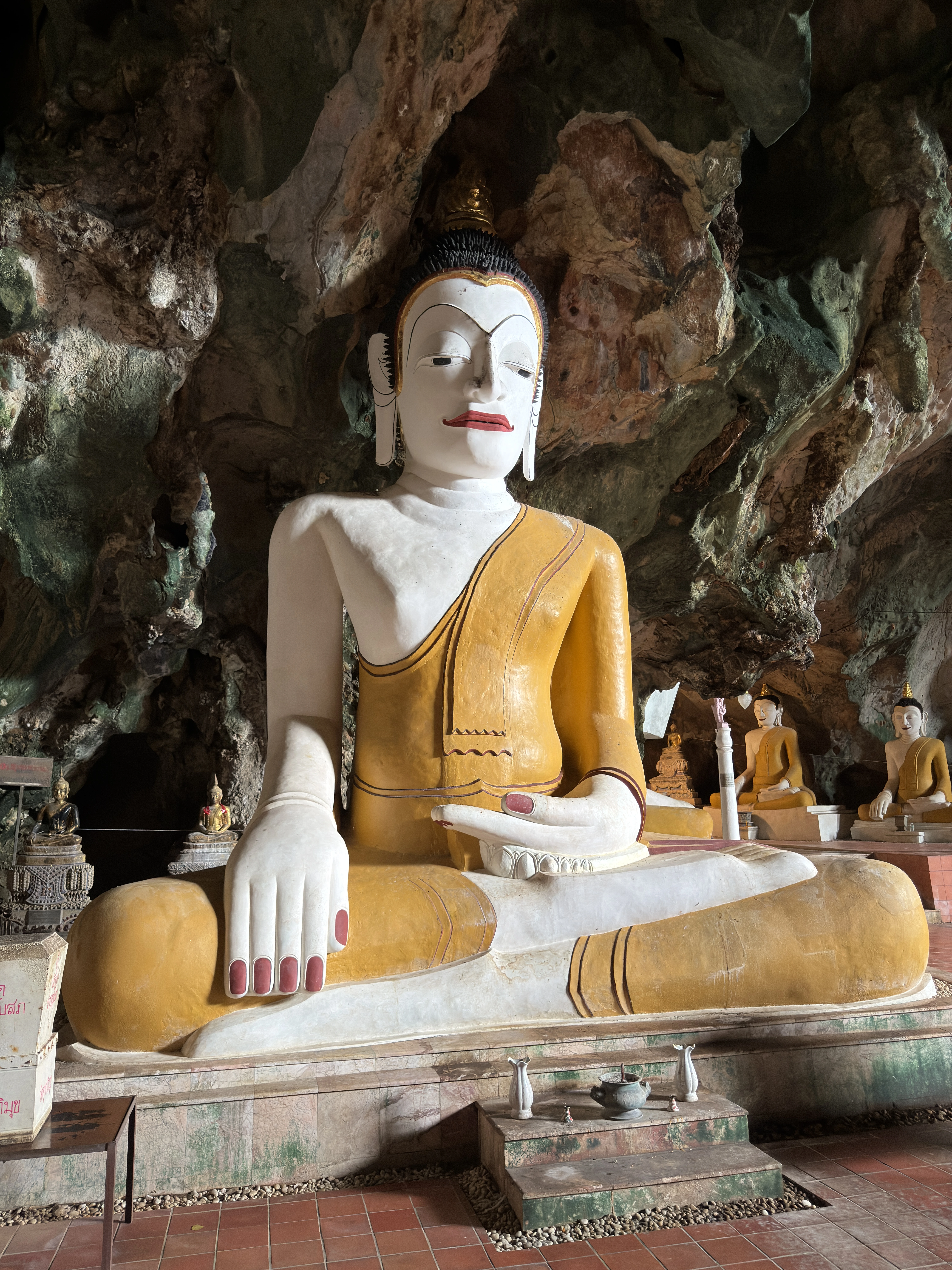
Wat Khuha Phimuk, also known as Wat Na Tham (“Temple in Front of the Cave”), is a revered cave temple in Na Tham subdistrict, Mueang Yala District, Yala Province, southern Thailand. Located about 5 km west of Yala city near the Hat Yai road, it stands as one of the three most sacred Buddhist sites in the far south, alongside Wat Phra Mahathat in Nakhon Si Thammarat and Wat Phra Borommathat Chaiya in Surat Thani. The complex features monastic buildings on the river plain and a dramatic limestone cliff cave on the opposite bank, accessible via a steep staircase adorned with dragon-shaped railings. At the cave entrance, a giant guardian figure called Chao Khao (built in 1941) watches over the site. Inside the vast chamber, natural karst formations—including stalactites, stalagmites, and a skylight (karstfenster) that floods the space with sunlight—blend seamlessly with Buddhist elements. A Srivijaya Museum at the cliff base displays regional artifacts.
The temple’s architecture highlights the fusion of natural geology and ancient craftsmanship. The highlight is a massive reclining Buddha statue, approximately 24.5–30 meters long, carved or constructed within the cave. The statue rests on a tiled marble floor amid numerous smaller Buddha images and religious offerings. Walls feature intricate carvings and murals depicting Jataka tales from Buddhist mythology and historical narratives. A sacred well inside the cave adds to the serene atmosphere. The overall design reflects Srivijayan artistic influences from the 8th century, with later Theravada adaptations. The cave’s deeper, less-developed sections allow self-guided exploration under electric lights, preserving its mysterious, otherworldly quality.
Mythology surrounding Wat Khuha Phimuk centers on the reclining Buddha’s origins and spiritual potency. Local belief holds that the statue was originally crafted in the “Sleeping Narai” (Vishnu) posture during the Hindu-Buddhist Srivijaya period, later modified into a Hinayana (Theravada) reclining Buddha representing the Buddha’s parinirvana. A naga (serpent) motif over the head supports this transitional legend, symbolizing the region’s shift from Mahayana/Hindu influences to Theravada dominance. The cave itself is seen as a sacred natural sanctuary where divine forces converged, protecting the image and granting blessings to devotees. Folklore emphasizes its role as a spiritual guardian for southern Thailand, with the giant Chao Khao serving as a protective sentinel against malevolent forces. These tales underscore themes of religious syncretism and enduring sacred power.
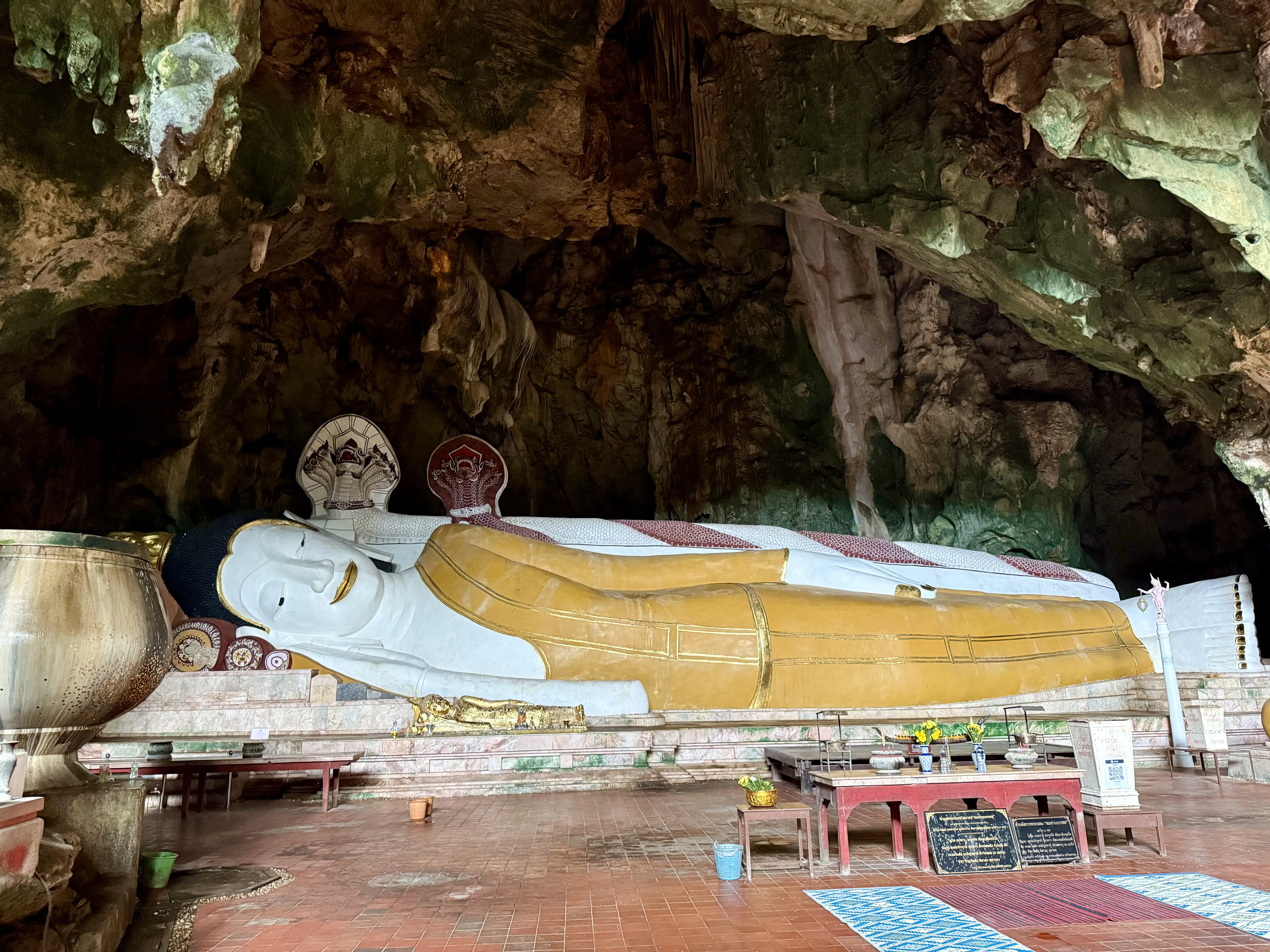
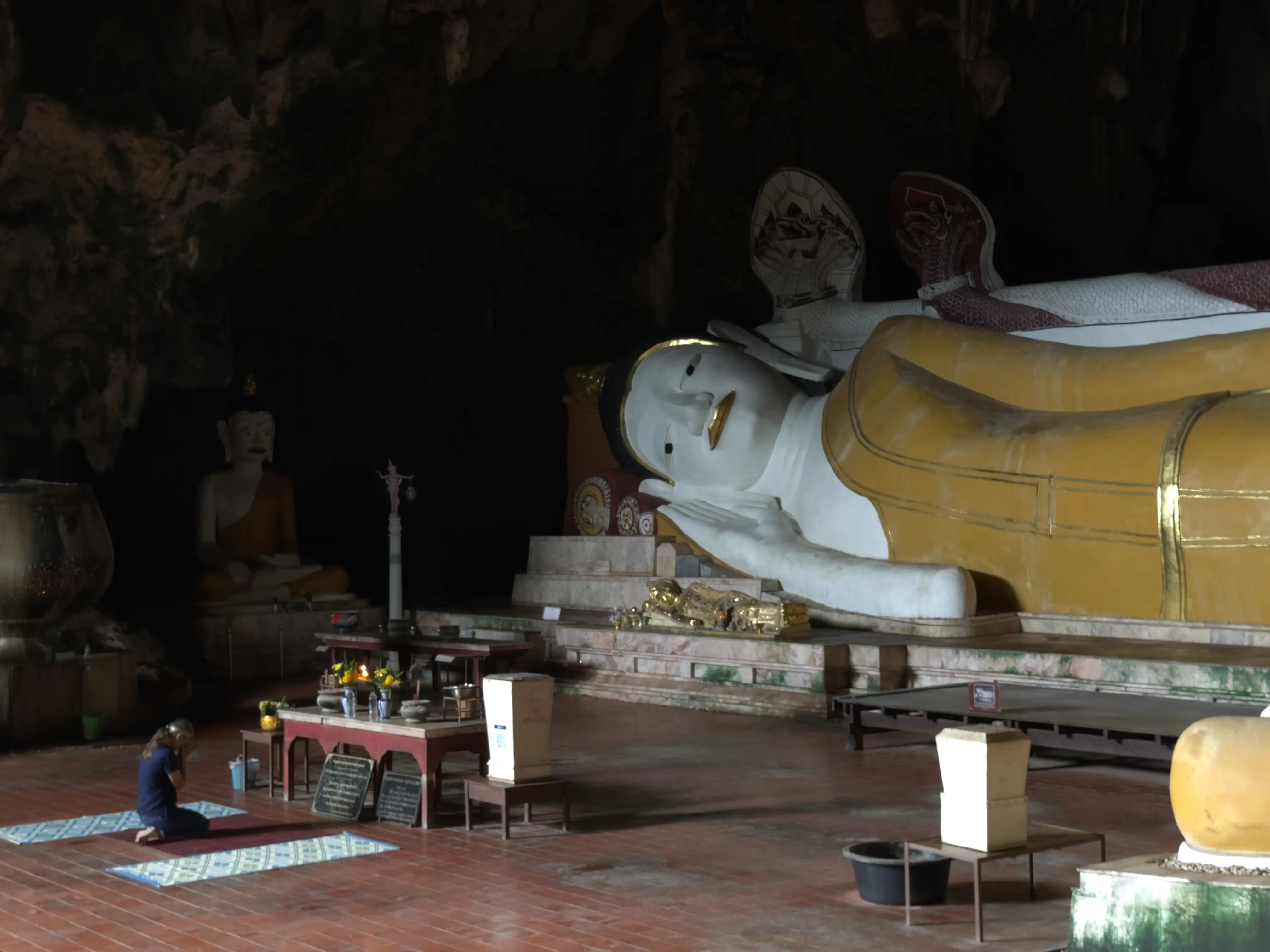
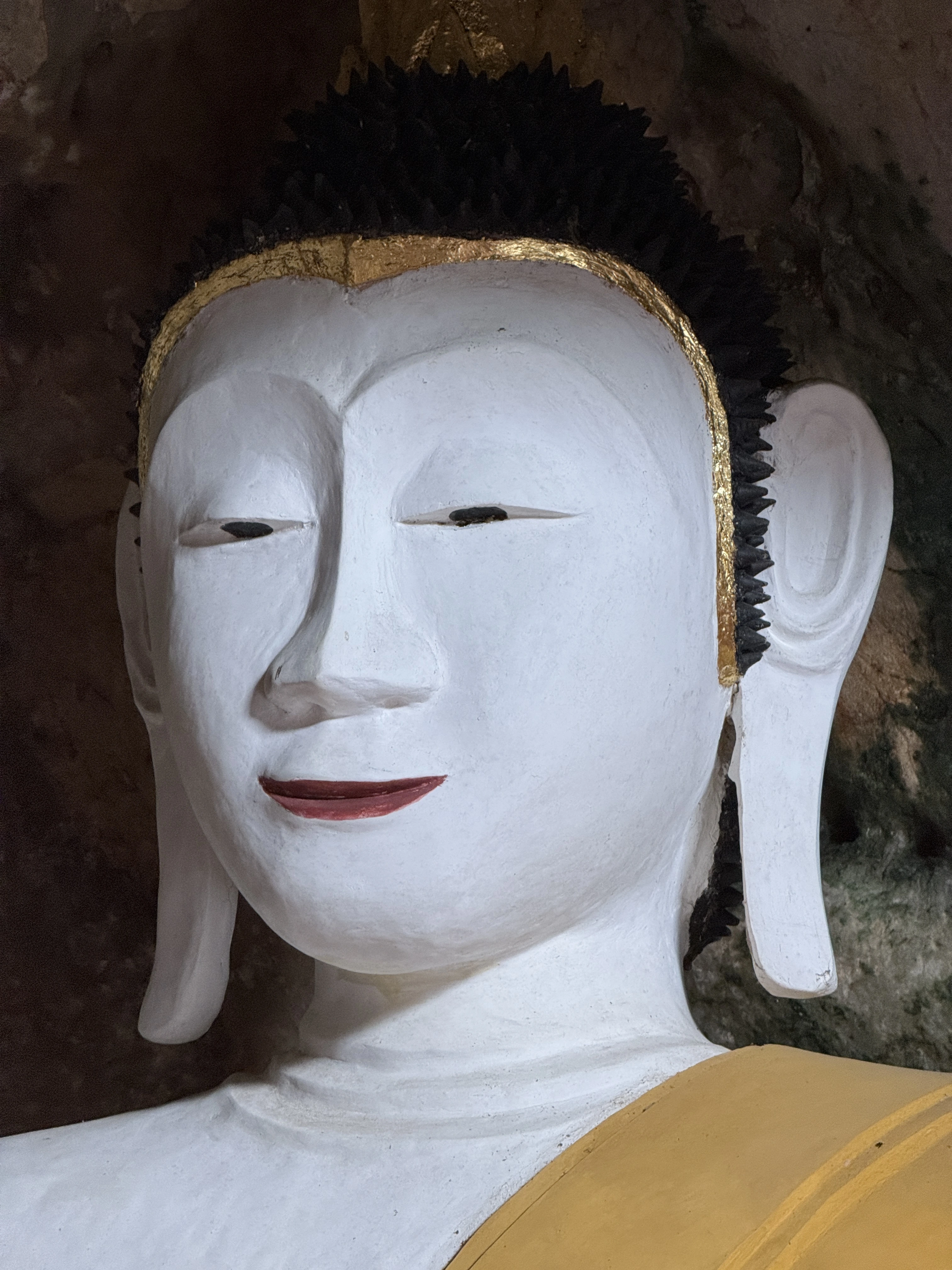
Historically, the site dates to the Srivijaya era, with the reclining Buddha believed to have been created around 757 CE. It represents the prosperity of Buddhism in the Malay Peninsula under Srivijayan maritime influence, which blended Indian, Javanese, and local elements. The temple evolved through subsequent kingdoms, maintaining its importance as Buddhism transitioned to Theravada. In the 20th century, restorations and the addition of the guardian figure and museum enhanced its status. During Field Marshal Plaek Phibunsongkhram’s era, the area saw administrative developments, but the temple retained its ancient character as a cultural anchor in Yala.
As a pilgrimage place, Wat Khuha Phimuk draws Buddhists and visitors seeking merit and tranquility. Devotees climb the dragon staircase to offer prayers, flowers, and gold leaf to the reclining Buddha, circumambulate the image, and meditate in the sunlit chamber. It serves as a focal point for regional festivals and merit-making rituals, especially during important Buddhist holy days. Many combine visits with almsgiving or quiet reflection, viewing the site as a living link to southern Thailand’s ancient heritage. Its peaceful setting amid rivers and cliffs fosters spiritual renewal, making it a vital cultural and religious landmark in the far south.
Martin Gray is a cultural anthropologist, writer and photographer specializing in the study of pilgrimage traditions and sacred sites around the world. During a 40 year period he has visited more than 2000 pilgrimage places in 160 countries. The World Pilgrimage Guide at sacredsites.com is the most comprehensive source of information on this subject.